We’re bringing textbooks back (yeah!)
We’re bringing textbooks back (yeah!)
Less scrolling, get literacy on track
Real-world phenomena—we’re digging into that
Think like a scientist: what backs that fact?
Take ’em to the page!
If JT brought sexy back, we can bring textbooks back. Here’s hoping we go straight to number one … on your science booklist.
Science asks students to do a lot. They need to familiarise themselves with new vocabulary, understand new concepts, interpret evidence, and explain their thinking. They’re learning the science and the language that helps them make sense of it.
That's easier when there's a clear place to start. The textbook gives students a consistent anchor: the explanation, the key terms and the next step, all on the same page. The online platform extends that same learning, with practice, feedback and the chance to revisit ideas whenever they need to.
We want students spending more time thinking about science, and less time working out where to look.
The entire lesson on one double-page spread
Supporting students starts with clear explanations, purposeful modelling, guided practice and opportunities to apply what they’ve learned. Reading belongs throughout that sequence.
Our science textbook organises each lesson onto one double-page spread, bringing explanations, scientific vocabulary, diagrams and structured thinking activities together. Content is chunked and concise, giving students a manageable amount to work through and a clear place to return to.
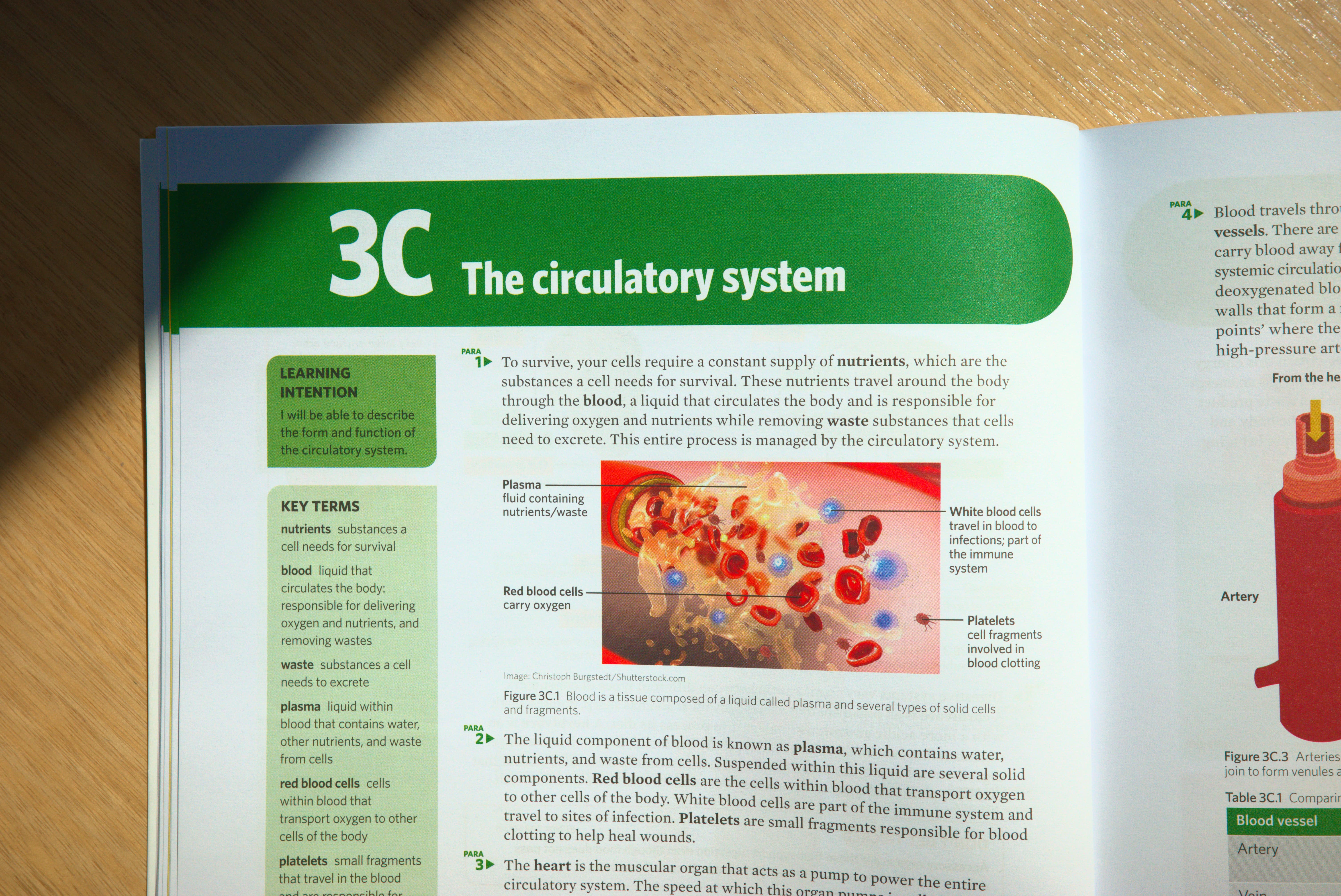
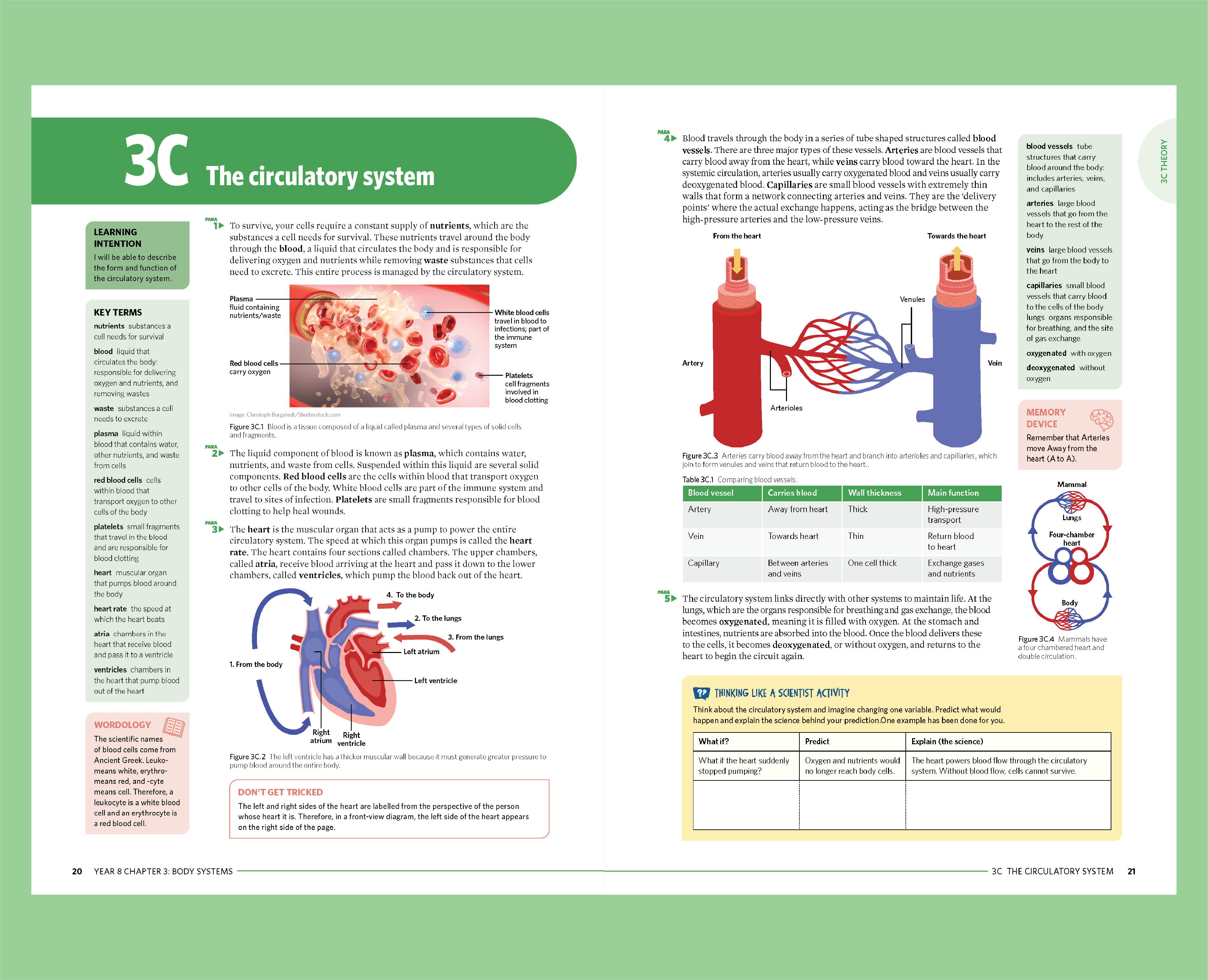
Learning intentions make the focus clear. Labelled diagrams give teachers something to unpack with the class. Step-by-step sequences and decision trees create opportunities to model both a process and the reasoning behind it.
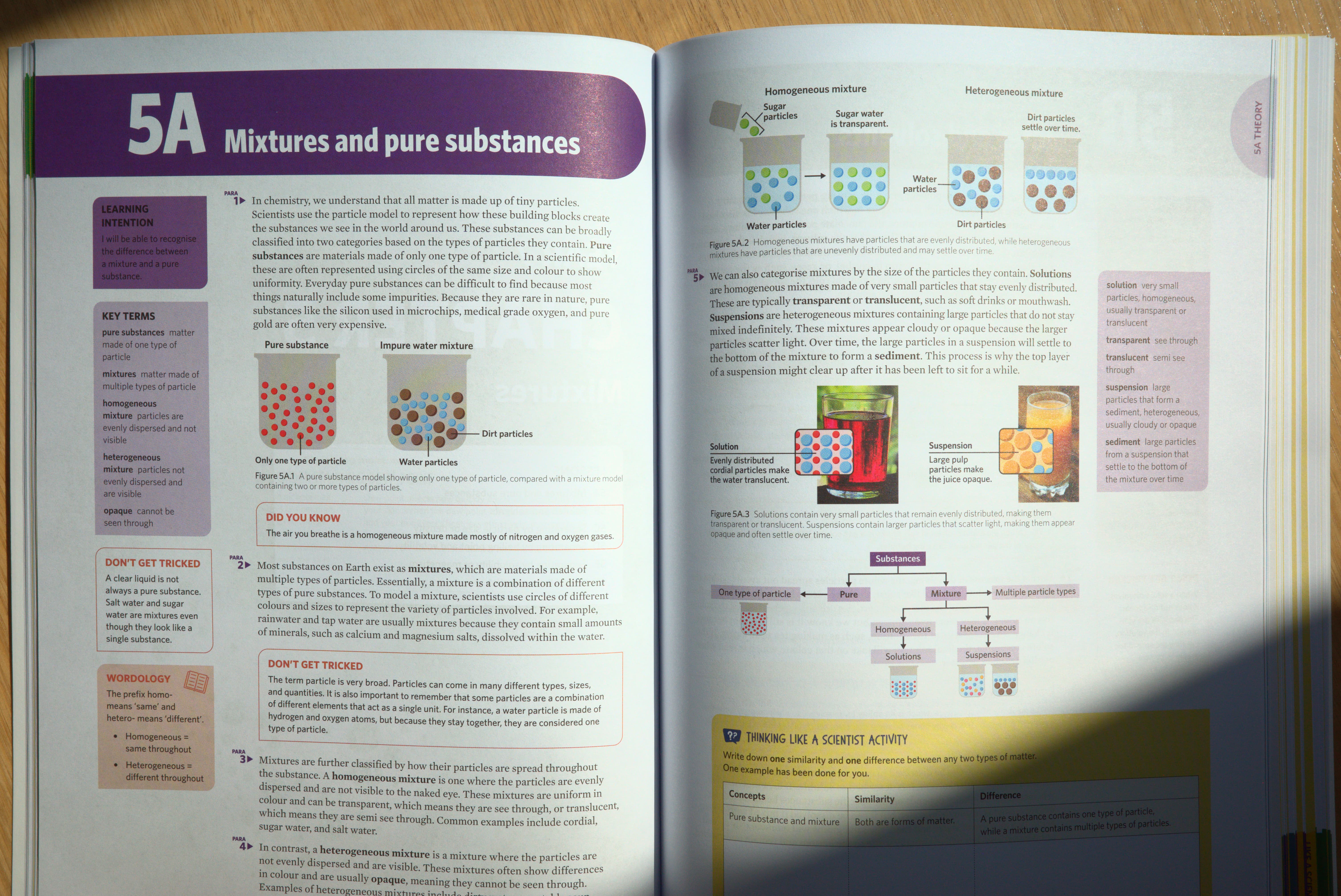
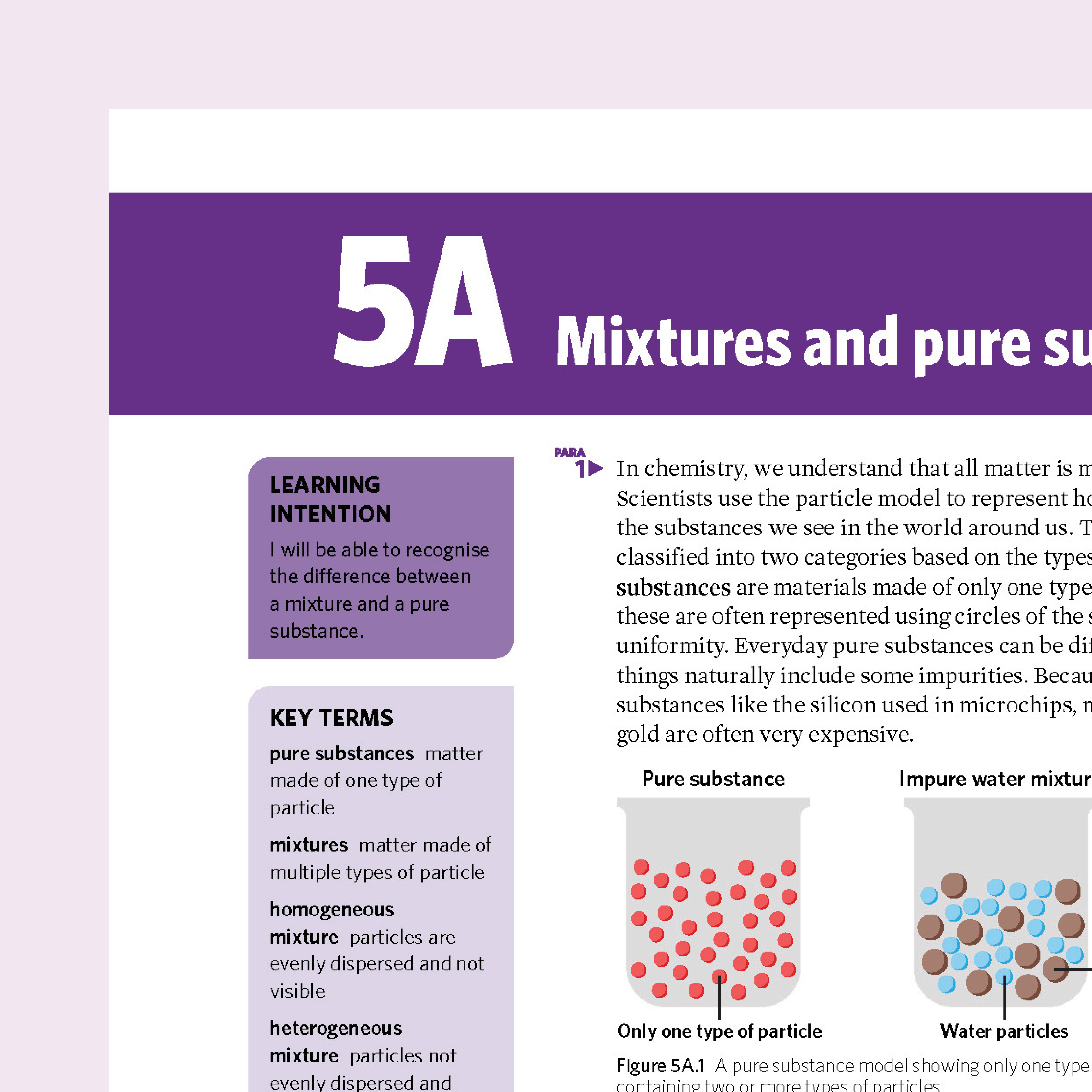
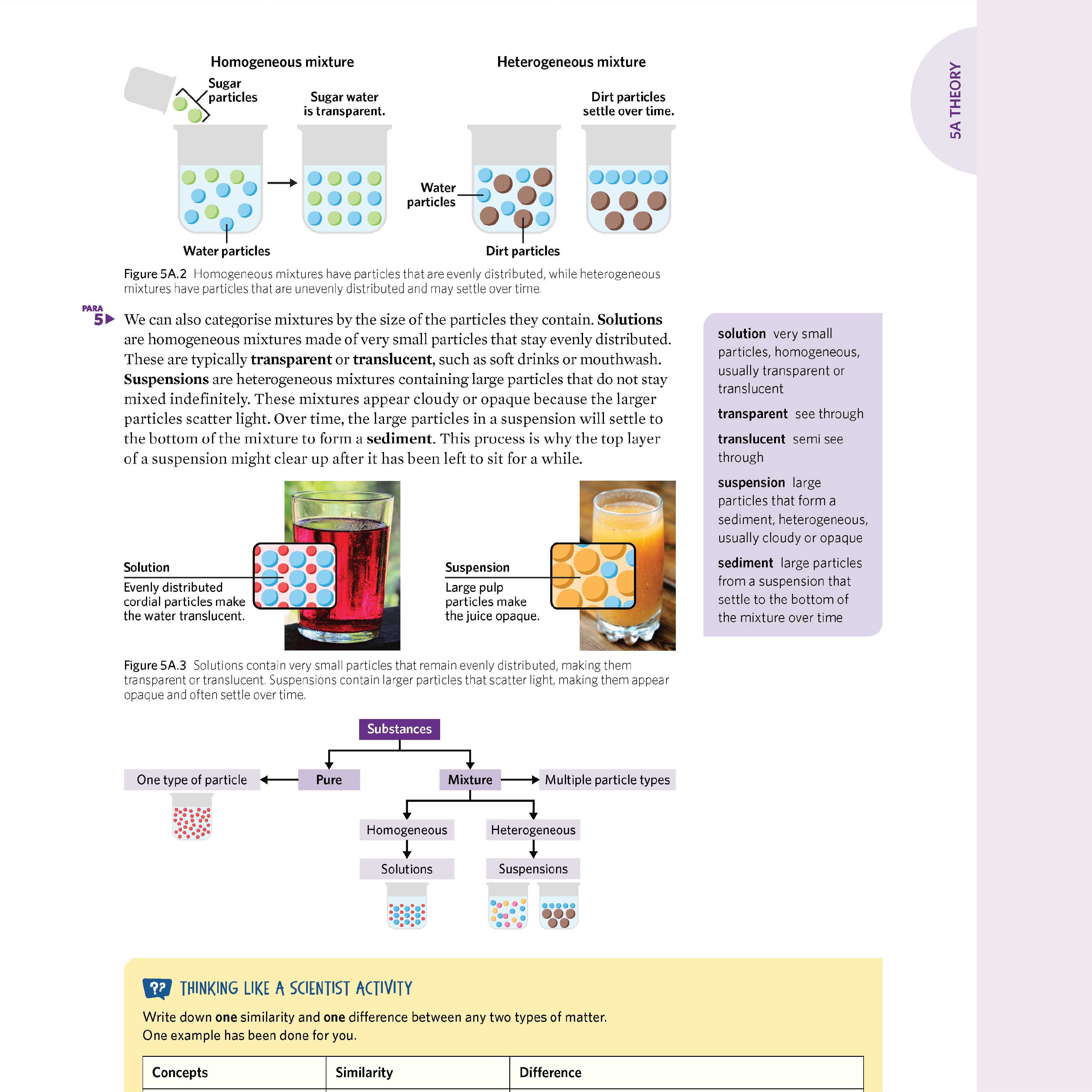
In Mixtures, for example, students can follow how a separating funnel works, then use a decision tree to consider which separation method suits particular properties, all within the same spread. Teachers can draw on the page during explicit instruction, and students can revisit it as they practise, discuss and explain.
Tier 3 vocabulary? Let’s break it down.
Homogeneous. Heterogeneous. Chromatography.
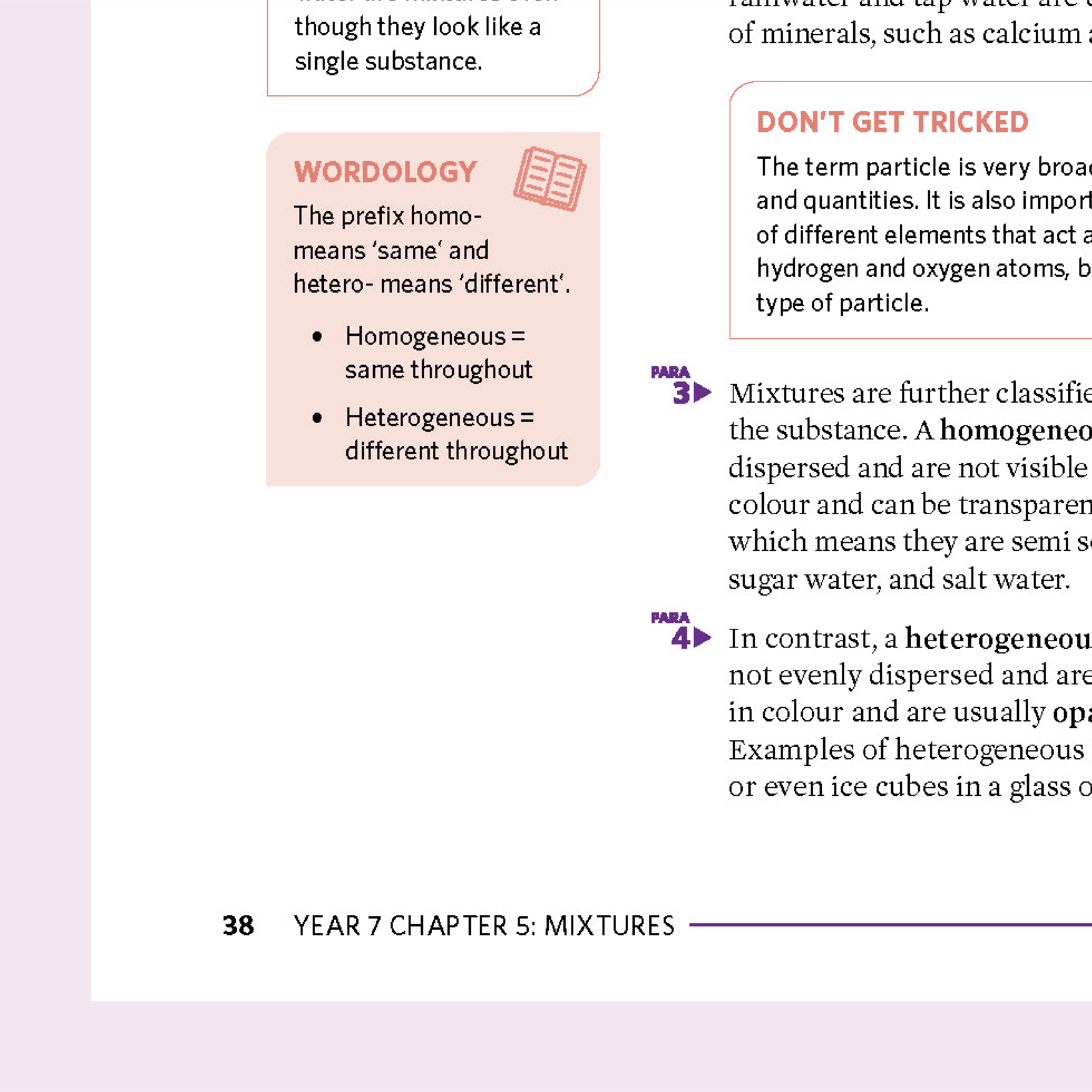
Scientific vocabulary can be a hurdle. Key terms sit alongside the explanations where students encounter them, while Wordology boxes unpack how scientific words are built. Learning that homo- means “same” and hetero- means “different” gives students a way into understanding homogeneous and heterogeneous mixtures. It also gives them tools to unpack words such as homozygous when they encounter them in later years.
That makes literacy a visible part of the lesson: unpacking meaning, using vocabulary accurately and developing explanations others can follow.
Misconceptions? Don’t get tricked.
A clear liquid must be pure. Dissolved salt can be filtered out. Magnets attract every metal.
These are the kinds of ideas worth stopping to question.
The textbook’s Don’t get tricked boxes address common misconceptions alongside the relevant content. In Mixtures, students encounter a reminder that salt water can look like a single substance while still being a mixture.
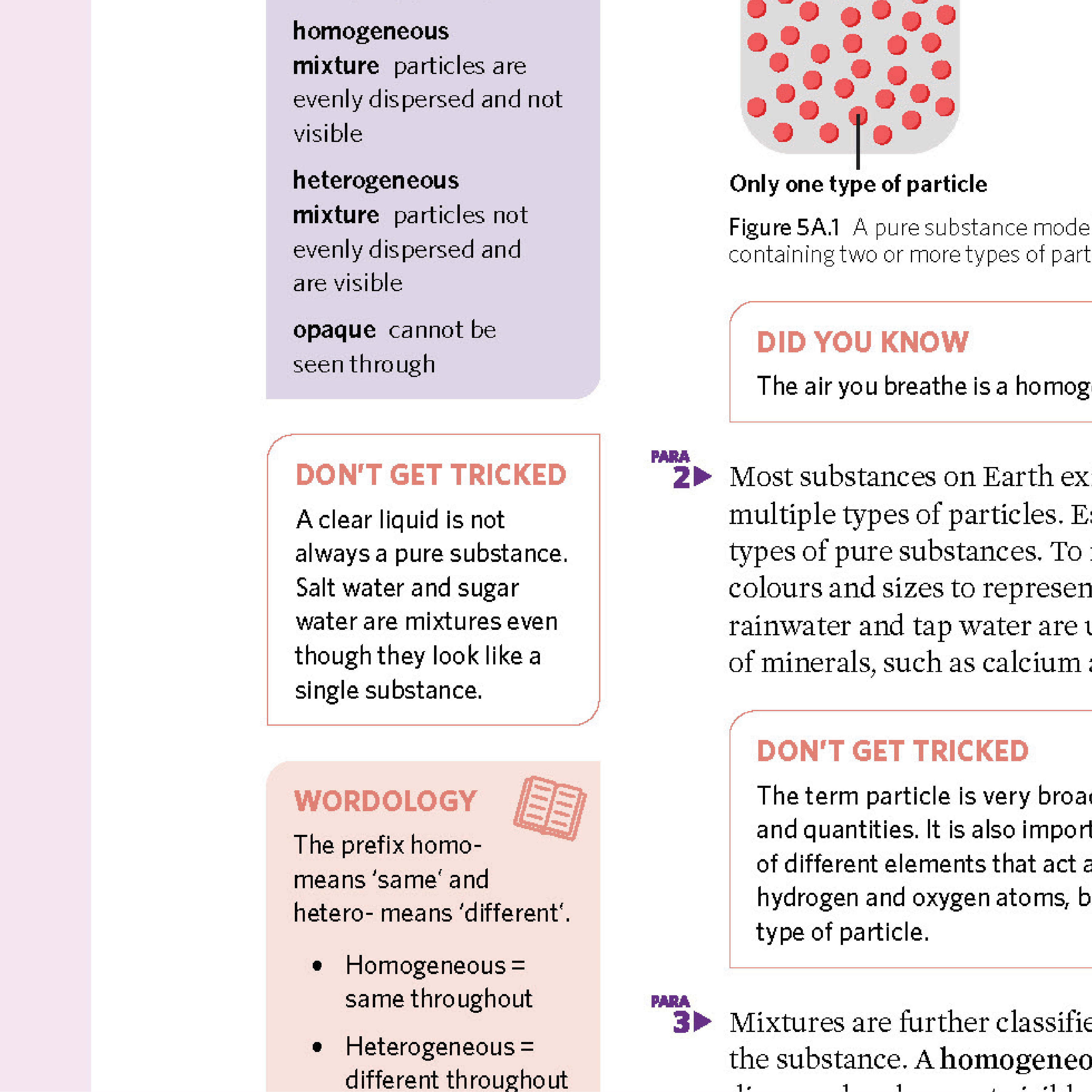
For teachers, these features offer a ready starting point for checking understanding. Who agrees? Why? What evidence would help us decide?
For students, they’re an invitation to pause, reconsider a first impression and explain more carefully.
Show me how you know
Students need opportunities to practise scientific reasoning, with support for how to get started.
Like a scientist thinking routines provide a response structure and an example already completed. These routines ask students to compare and contrast, connect parts to a whole, evaluate claims and consider how new evidence changes scientific understanding.
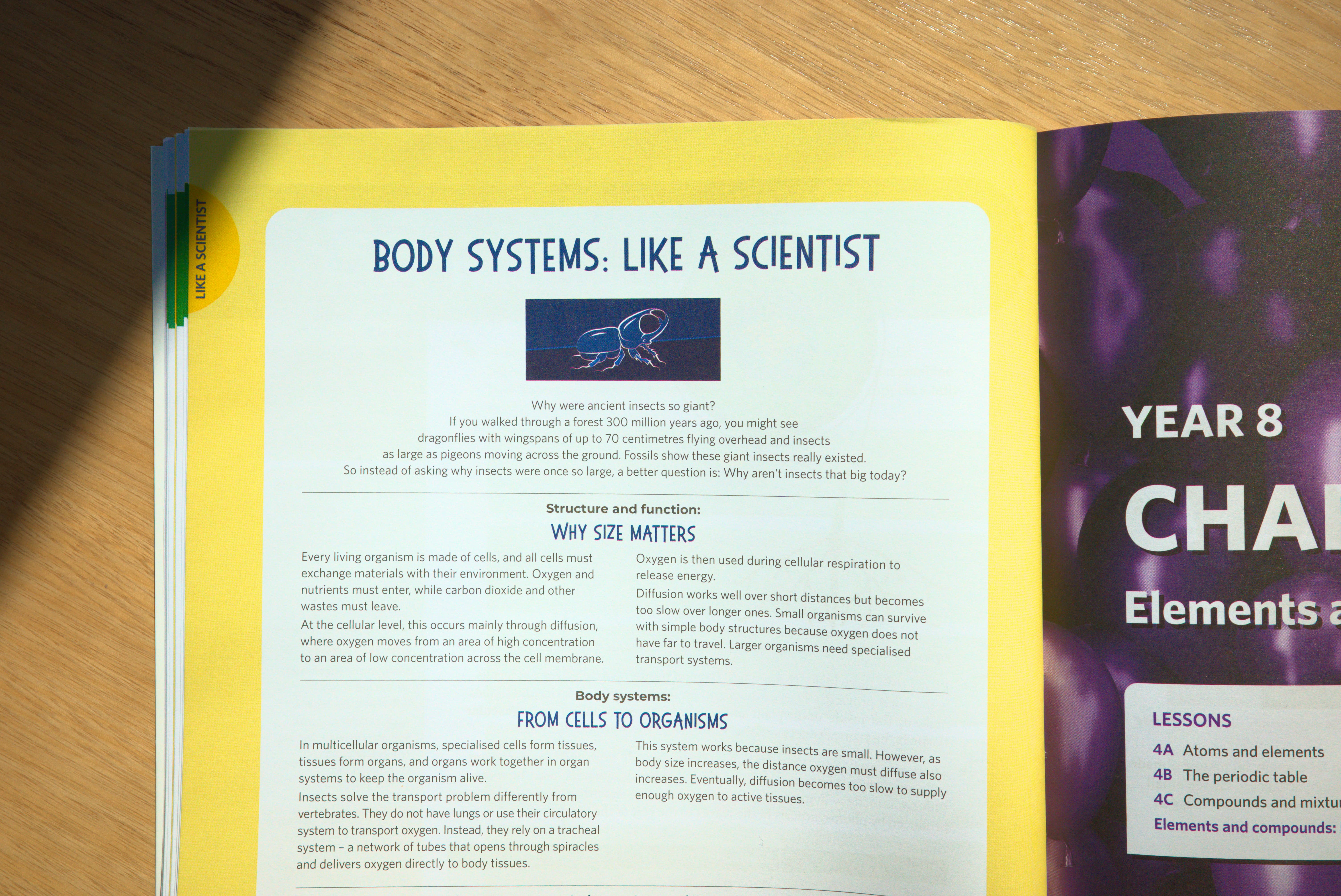
Through these routines, students practise the thinking that VCE command terms such as compare, explain and evaluate demand. They build those habits from the early secondary years. The structure makes the task clear while leaving students responsible for the thinking. Their responses also give teachers insight into how students connect concepts, use vocabulary and justify an answer.
Do whales have belly buttons? Now we’ve got your attention.
An unexpected question can lead somewhere interesting.
In the Classification chapter, “Do whales have belly buttons?” opens a Like a scientist reading in which students evaluate evidence. Students look beyond a whale’s shape and habitat to consider the features that explain its classification as a mammal.
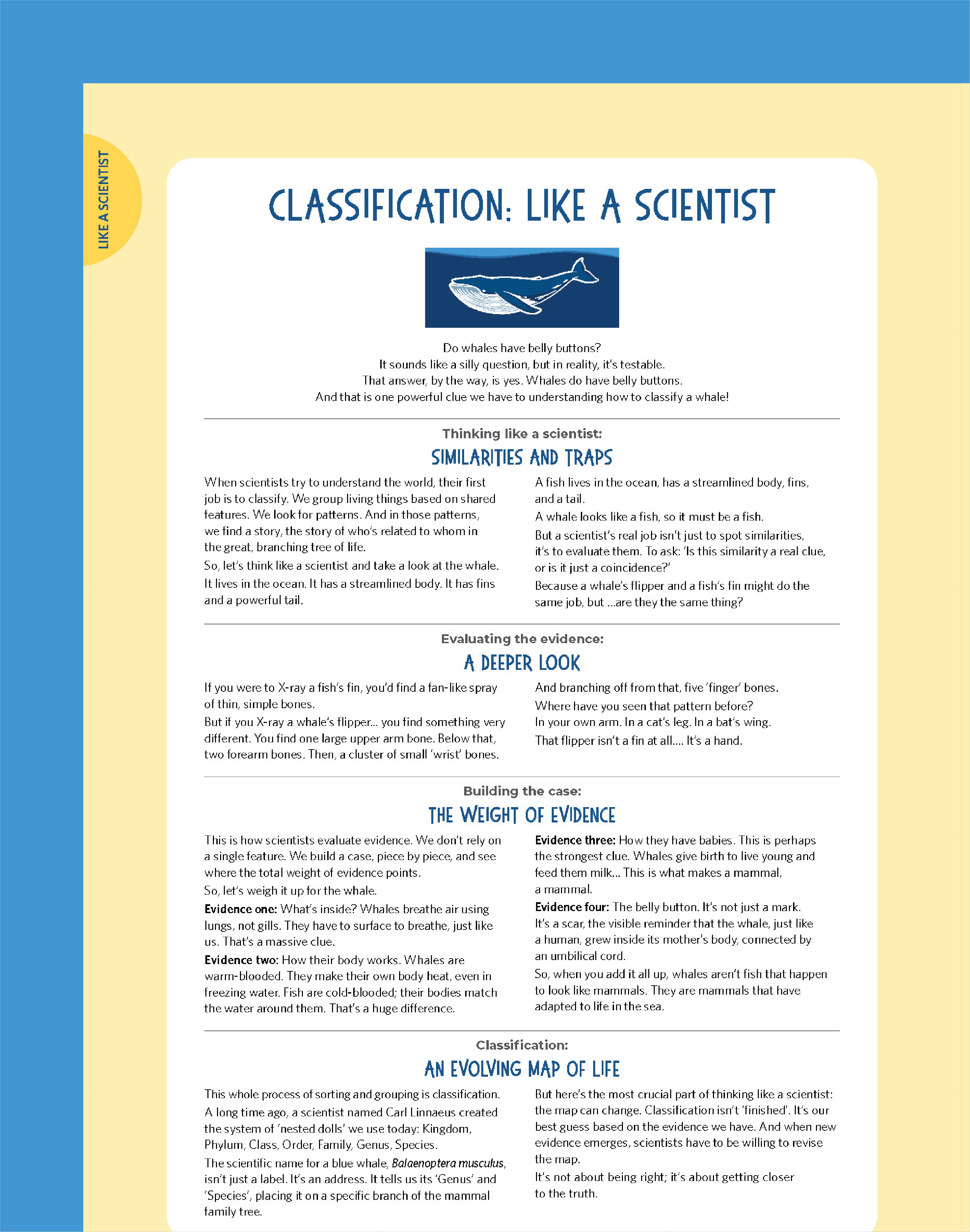
These readings are also available as animated videos presented by Jane Bunn. Each brings chapter knowledge together through a question worth exploring, connecting science understanding, Science as a Human Endeavour and scientific inquiry skills.
The question gets students interested. Working through the evidence to answer it shows them how scientists build an explanation.
Take ’em to the flip!
There’s a twist to the design. Literally.
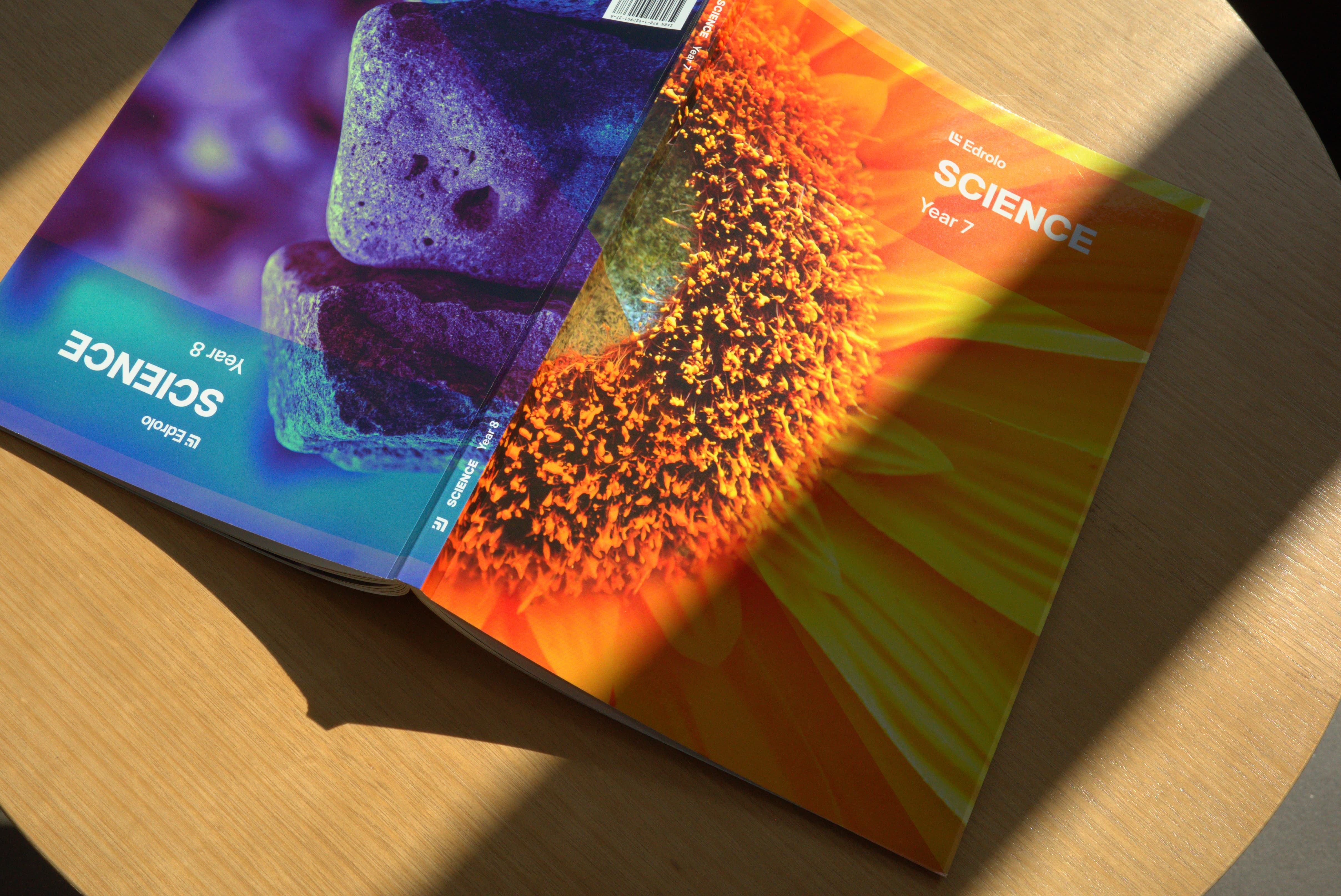
The textbook uses a tête-bêche format: two year levels in one book, each beginning from a different end. Flip it over and you have a new starting point.
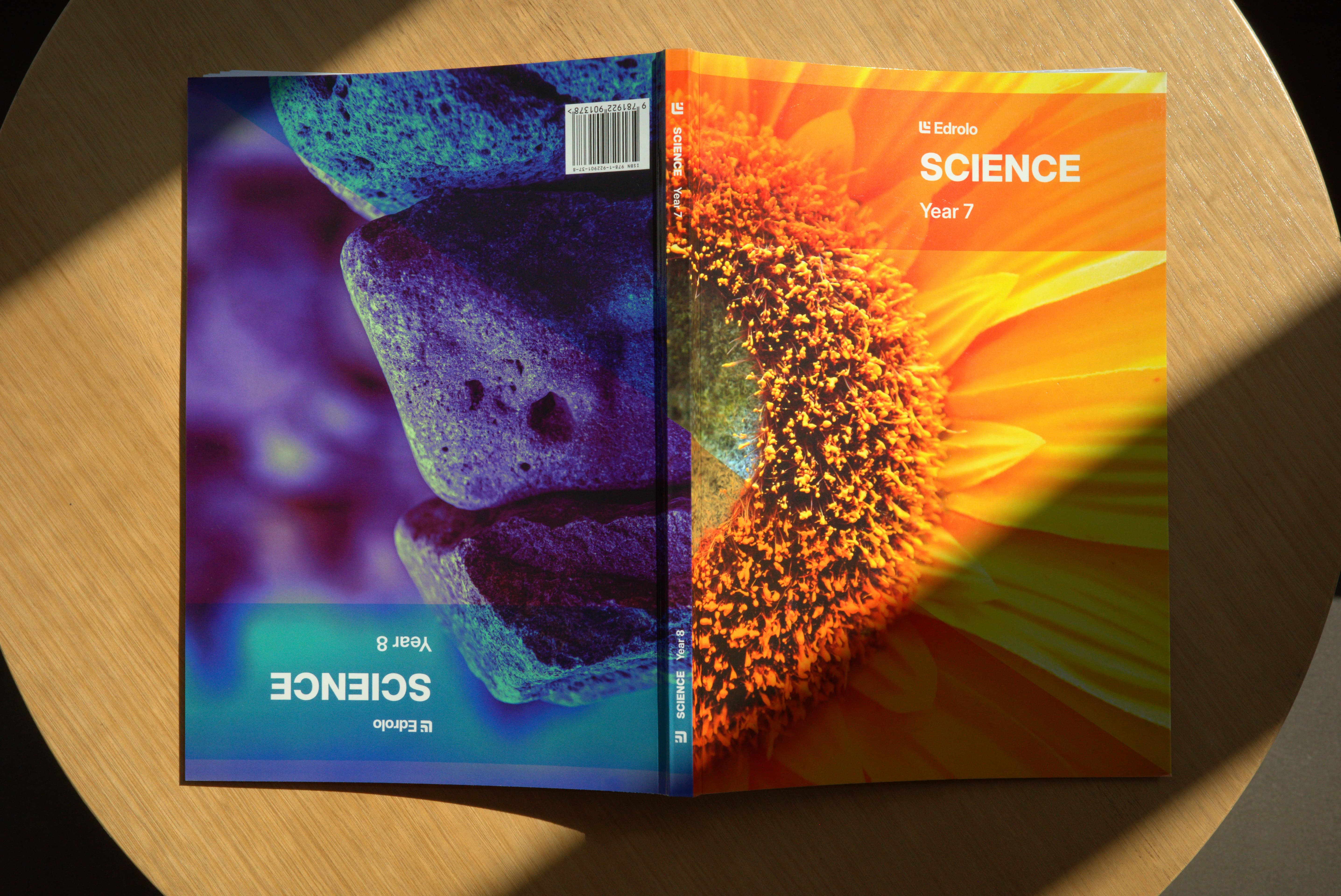
Teachers can teach the two levels in either order, choosing the sequence that suits their curriculum.
From curriculum to classroom.
The textbook is designed around the Victorian Teaching and Learning Model 2.0 and works alongside slides, teacher modelling, guided practice and opportunities for students to apply their knowledge. Its explanations and visuals provide a foundation for explicit teaching, while vocabulary support and structured activities help students access scientific language, practise new ideas and reveal their thinking.
Get your science on. You ready?
Check out our Classification and Mixtures sample chapters to see what’s inside.